- Have any questions?
- +88-01714063309
- info@bdix.net

Oxford Covid-19 vaccine shows 70% protection
Covid most contagious in the first 5 days of illness, study finds
November 23, 2020G20 leadership vital in defense against Covid-19: UN chief
November 23, 2020Published in: The Business Standard
Date: 23 November, 2020
The Oxford jab is far cheaper, and is easier to store and get to every corner of the world than the other two
The Covid-19 vaccine developed by University of Oxford and AstraZeneca is 70% effective in protecting against the virus, a large scale trial shows.
The result is somewhat disappointing for Oxford as vaccines by Pfizer and Moderna showed 95% protection, reports BBC.
However, it can also be considered a triumph as the Oxford shot is far cheaper, and is easier to store and get to every corner of the world than the other two. So it will still play a significant role in tackling the pandemic, if it is approved by regulators. The Oxford researchers have performed the normally decade-long process of developing a vaccine in around 10 months.
The UK government has pre-ordered 100 million doses of the Oxford vaccine, enough to immunise 50 million people.
What did the trial show?
More than 20,000 volunteers were involved, half in the UK, the rest in Brazil. There were 30 cases of Covid in people who had two doses of the vaccine and 101 cases in people who received a dummy injection.
The researchers said it works out at 70% protection. Intriguingly, the effectiveness rose to 90% in a group of volunteers who were given an initial half dose, followed by a full dose. It’s not clear why there is a difference.
When will I get it?
In the UK there are four million doses ready to go, with another 96 million to be delivered. But nothing can happen until the vaccine has been approved by regulators who will assess the vaccine’s safety, effectiveness, and that it is manufactured to high standard. This will happen in the coming weeks.
However, the UK is ready to press the go button on an unprecedented mass immunisation campaign that dwarfs either the annual flu or childhood vaccination programmes. Care home residents and staff will be first, followed by healthcare workers and the over 85s. The plan is to then work the way down the age groups.
How does it work?
The vaccine is a genetically modified common cold virus that used to infect chimpanzees.
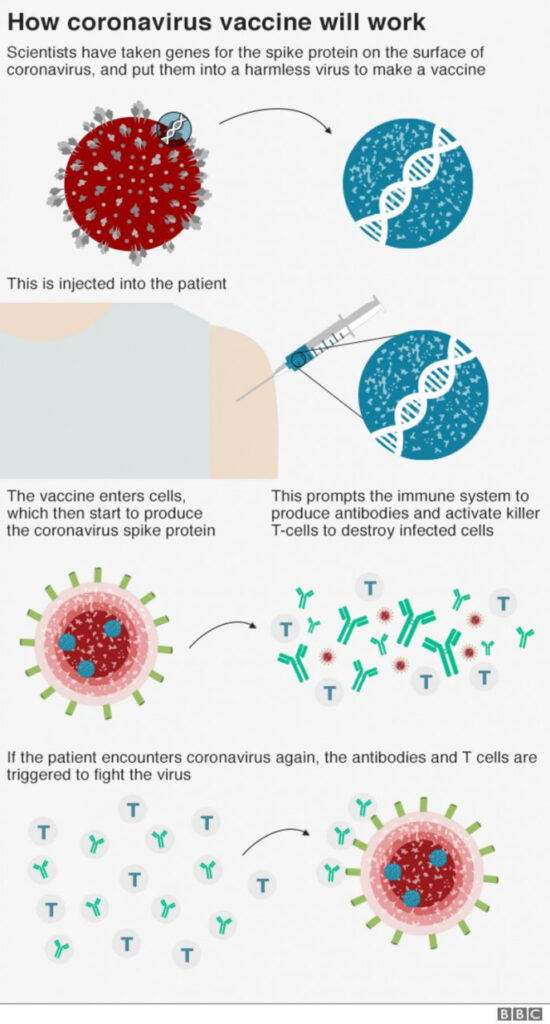
It has been altered to stop it causing an infection in people and to carry the blueprints for part of the coronavirus, known as the spike protein. Once these blueprints are inside the body they start the producing the coronavirus’ spike protein, which the immune system recognizes as a threat and tries to squash it. When the immune system comes into contact with the virus for real, it now knows what to do.
Are the results disappointing?
After Pfizer and Moderna both produced vaccines delivering 95% protection from Covid-19, a figure of 70% is relatively disappointing. However, anything above 50% would have been considered a triumph just a month ago.
This vaccine can also be stored at fridge temperature, which means it can be distributed to every corner of the world, unlike the Pfizer/BioNTech and Moderna vaccines, which need to be stored at much colder temperatures. Oxford’s manufacturing partner, AstraZeneca, is preparing to make three billion doses worldwide.
What difference will this make to my life?
A vaccine is what we’ve spent the year waiting for and what lockdowns have bought time for. However, producing enough vaccine and then immunising tens of millions of people in the UK, and billions around the world, is still a gargantuan feat.
Life will not return to normal tomorrow. but the situation could dramatically as those most at risk are protected. The deaths in the first wave were heavily concentrated in the over-80s and those in care homes. Protect those and this situation looks dramatically different.
Source: https://tbsnews.net/coronavirus-chronicle/oxford-covid-19-vaccine-shows-70-protection-161746